PAPERY AND WHITE
Silver birch
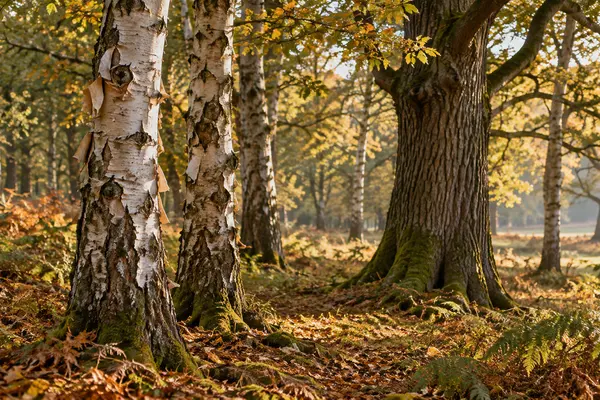
White all year and shedding like tissue paper, turning black and rugged at the base as it ages.
Try the finder doodlebark
A FIELD GUIDE TO TREE BARK
Leaves fall. Bark is there all year round.
Try the bark finder
LOOKthen touch
Papery white, patchwork green, orange near the top or thick enough to make a wine cork: bark is one of the easiest ways to tell trees apart, especially in winter. It is also a living shield, and a home for lichens that respond to the air around them. Here is what to look for, in plain English.
Plain English, with the sources linked.
At a glance
35 m
Grows to about
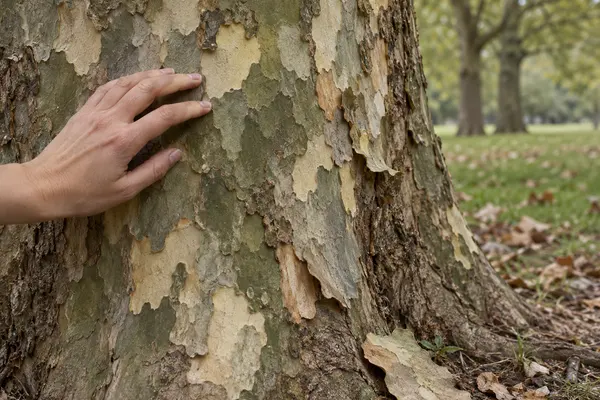
The bark breaks away in large flakes, revealing creamy bark beneath. The Woodland Trust links this shedding to the tree’s ability to cope with high levels of air pollution.
LONDON PLANE · CITY STREETS
25 years
Age at first cork harvest
Cork is the tree’s outer bark, stripped by hand. The second harvest comes 12 years after the first, then every nine or ten years. Around half of the world’s cork harvest takes place in Portugal.
CORK OAK · HARVESTED BY HAND
TWO BARKS WORTH KNOWING
One tree throws its bark away.
Another grows it back for people to harvest.
In both cases the outer bark can come away without killing the tree. The living layer just underneath is a different matter, as the facts below explain.
A QUICK BARK FINDER
Pick the description that best matches the trunk in front of you. The descriptions come from the Woodland Trust’s tree guides and the University of Washington Botanic Gardens.
This is a starting point, not a final answer. Bark changes with age, so check the leaves, buds or cones too.
THE SHORT ANSWER
Colour, texture and how it peels
can name a tree before you see a leaf.
PAPERY AND WHITE
White all year and shedding like tissue paper, turning black and rugged at the base as it ages.
Try the finderPATCHWORK FLAKES
Bark that breaks away in large flakes, leaving a camouflage pattern of green, grey and cream.
Why it peelsLIVING ON BARK
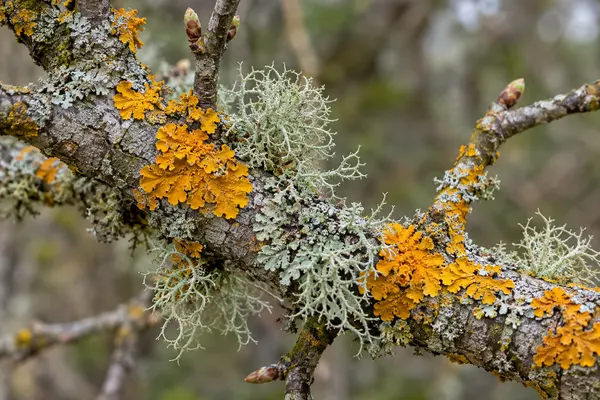
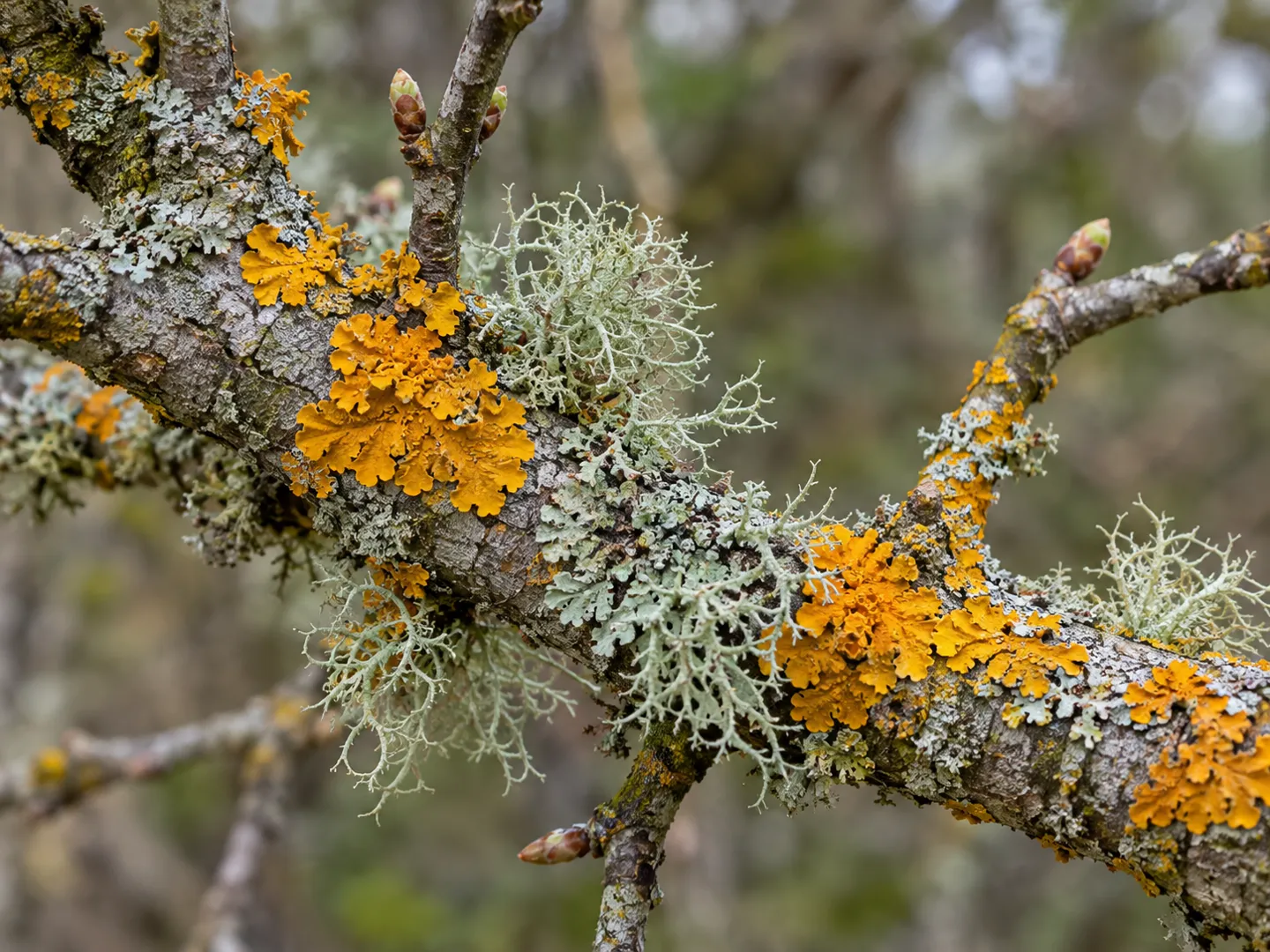
Some grow only where the air is clean, others only where it carries nitrogen pollution.
Read the bark facts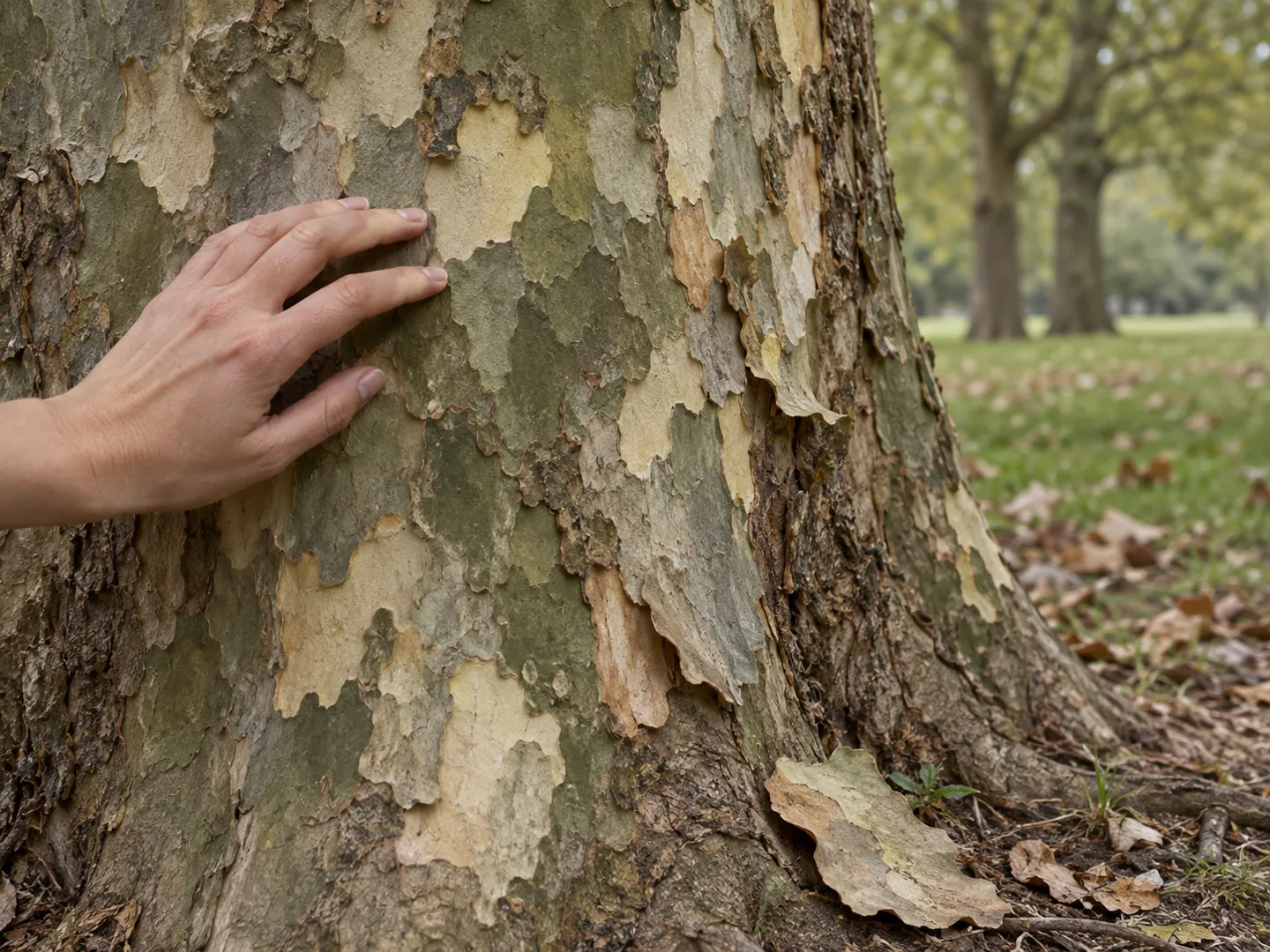
TRY IT ON A WALK
White, grey, green, orange or brown? Note it at eye level first, then look higher up the trunk.
Does it peel in strips, flake in plates, crack into ridges or stay smooth? Look for fallen pieces at the foot.
Check twigs and trunk for lichens and moss. Bright orange lichens and pale frilly ones tell different stories about the air.
Look and touch gently, but do not peel bark off living trees. Even the papery outer layers protect what lies beneath.
BARK FACTS
Under the bark lie the cambium and the phloem. The phloem carries sugars made in the leaves down to the roots, which is why damaged bark matters.
Losing bark all the way round a trunk, called ring-barking or girdling, cuts that flow. Strimmers, tight tree ties, rabbits, voles and deer are common causes.
Some lichens on trees are nitrogen-sensitive and grow only in clean air; others are nitrogen-tolerant and grow only where the air is polluted. Lichens on twigs react to lower levels than those on trunks.
Mature Scots pines have reddish bark towards the crown and brown bark towards the base, and the species can live for up to 700 years.
Young silver birches are white from top to bottom. As they mature, the base turns black and rugged and develops dark, diamond-shaped fissures.
QUICK QUESTIONS
Short answers to the questions people ask most.
Silver birch is known for bark that stays white all year and sheds in thin, papery layers. As the tree matures, the bark near the base turns black and rugged, with dark diamond-shaped fissures.
London plane bark breaks away in large flakes, leaving creamy patches beneath and a camouflage-like pattern. The Woodland Trust links this shedding to the tree’s ability to cope with high levels of air pollution.
Cork is the outer bark, stripped by hand. The first harvest happens when the tree is about 25 years old, the second 12 years later, and after that every nine or ten years.
It can. Just under the bark is the phloem, which carries sugars from the leaves down to the roots. If the bark is lost all the way round a trunk, known as ring-barking, the roots are starved and the tree can die.
Often lichens. Some lichen species only grow on trees in clean air, and others are nitrogen-tolerant and grow where the air is polluted, so the mix on a tree says something about local air quality.
Sources
A NAME WITH ROOTS
It is not open for bids or leasing right now. Browse the catalogue for names you can bid on or lease today.